History and charism
The history of Parroquia San Juan de la Cruz and the Discalced Carmel
Where the Carmelites come from, how they reached El Salvador, and how a retreat house ended up becoming this parish.
The Order
The Discalced Carmel is born in the sixteenth century
The Order of Discalced Carmelites was founded in Spain in the sixteenth century by Saint Teresa of Ávila, together with Saint John of the Cross, and over time it spread across the world. The first missionaries reached Latin America in that same century. They arrived through Mexico and from there opened one mission after another.
Central America was founded by two Spanish provinces. The first missionaries from the province of Navarre arrived in Guatemala and Panama. Those from the province of Aragón and Valencia arrived in El Salvador, Nicaragua and Costa Rica.
El Salvador
From Hospital Rosales to the first parish
The Carmelites arrived in El Salvador in the nineteen sixties. They began working at Hospital Rosales and in a small chapel nearby, dedicated to health care, until that work started to grow.
Out of it came the first Carmelite parish in the country: El Carmen, in Colonia Roma. Over the years it became a very large parish with sizeable movements, and it was from that growth that the story of this second house began.
The saint of this house
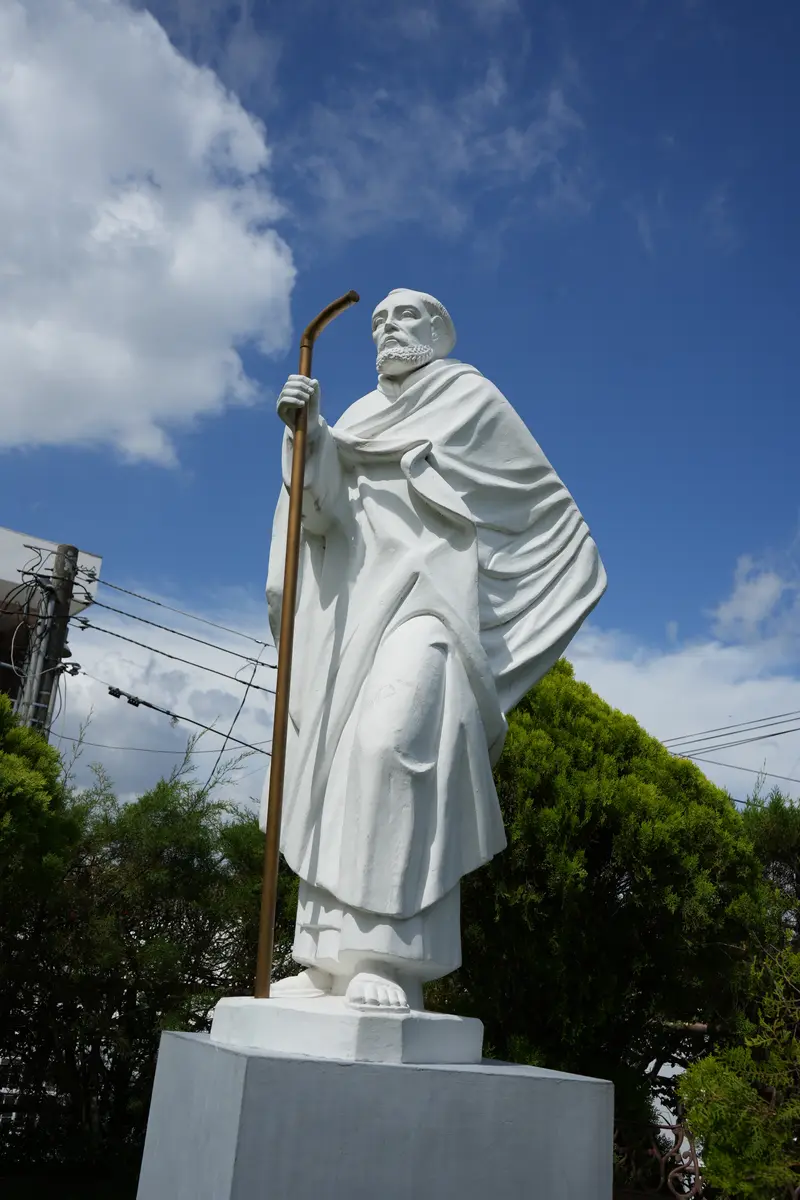
Who was Saint John of the Cross?
Juan de Yepes Álvarez was born in 1542 in Fontiveros, a village in Ávila, into a poor family. He entered the Carmel young, and in 1567 he met Saint Teresa of Ávila, who persuaded him to join her reform. A year later he was one of the first discalced friars, and together they changed the face of the Order.
The reform cost him dearly. In 1577 his own brothers from the unreformed branch imprisoned him in Toledo, in a narrow cell, for nine months. There, with no paper and almost no light, he composed much of the Spiritual Canticle from memory. He escaped one night in August 1578.
Out of that experience came the books that made him a master: The Ascent of Mount Carmel, The Dark Night, The Spiritual Canticle and The Living Flame of Love. His subject is always the same: how a person moves from a faith made of consolations and habits to a real encounter with God, and what to do when that road turns dark. He died on 14 December 1591 in Úbeda, which is the day the parish keeps as its patronal feast.
In the evening of life, we will be judged on love. Saint John of the Cross
He was canonised in 1726, and in 1926 Pope Pius XI declared him a Doctor of the Church with the title Mystical Doctor. That makes 2026 a special year: three hundred years since his canonisation and one hundred since his doctorate, and the Order is living a Jubilee Year that opened on 13 December 2025.
This parish
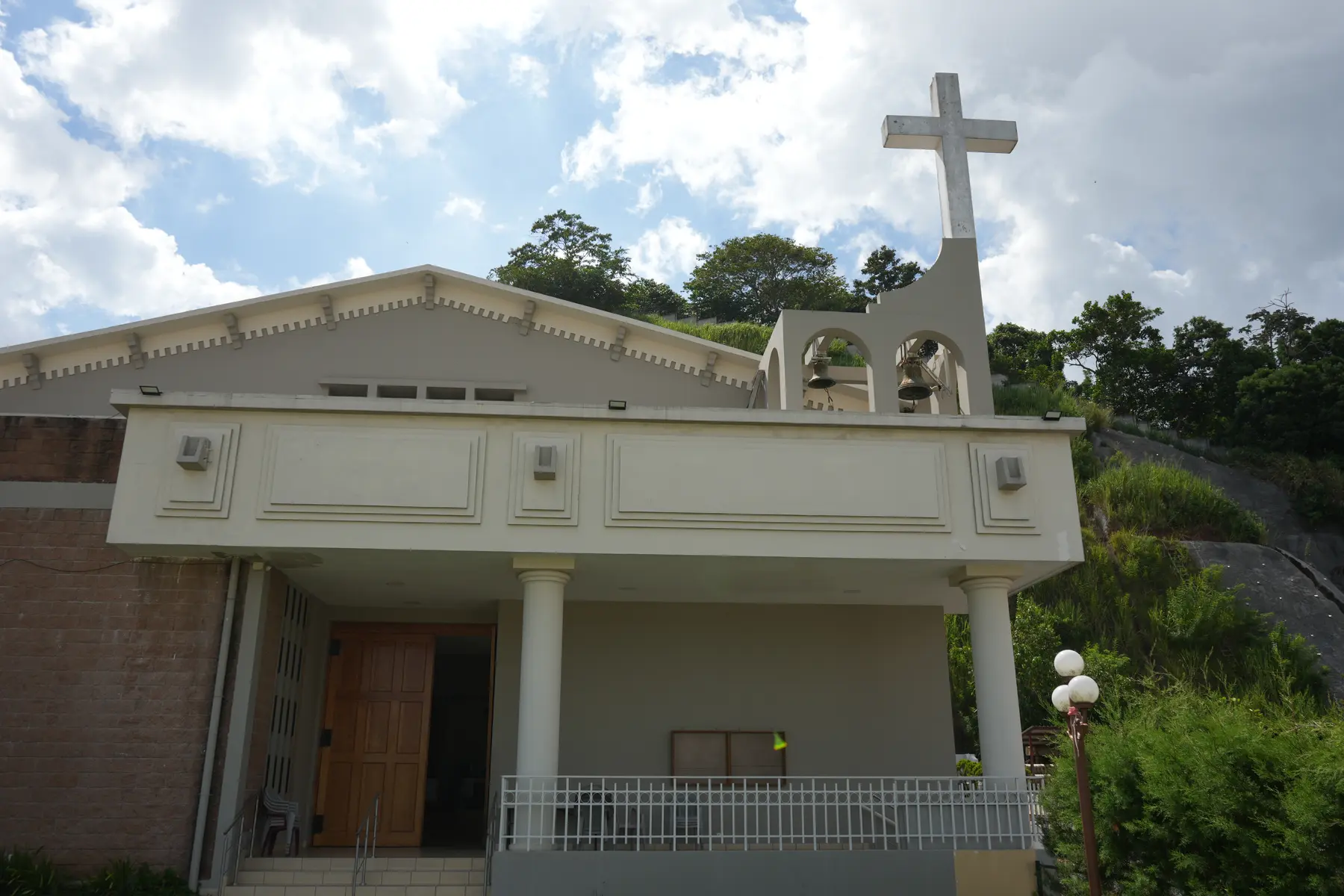
It started as a retreat house
The movements of El Carmen parish, above all the married couples' groups, needed somewhere to hold their retreats. Father Manuel Coneza, a Spaniard who worked a great deal in these lands and who has since passed away, obtained this piece of land and began building a retreat house for the youth groups and communities of the parish.
After a lot of work the retreat house was finished, but the chapel was still missing. So the father began a project conceived as the chapel for the retreat house. The project kept growing, and by the time it was formally presented it was no longer a chapel: it was a parish meant to serve all the families living nearby, in an area where a great many residential developments were going up.
The friars of the Provincial Council were not entirely in agreement, because the Order was already carrying one very large parish. With the intervention of the archbishop the decision was made, and what was meant to be a simple chapel was established as Parroquia San Juan de la Cruz.
The foundation stone was laid around 2005, and the parish recently celebrated fifteen years since its founding. It is not one of the old parishes, it is genuinely recent, yet it has already been walking here for a good while, taking in more and more movements and communities.
Note for the parish: the exact dates of the foundation stone and of the canonical erection, and the full name of the archbishop involved, are still to be confirmed. As soon as we receive them we will make this page precise.
Charism
What is a charism, and what is the Carmelite one?
A charism is what distinguishes a movement within the Church, what gives its work a particular focus. The Salesians, for example, have the charism of working with young people. The Mercedarians work with people in prison.
The Carmelites were born as a movement of religious devoted in a particular way to prayer and to mission. Our charism is contemplation and the spiritual life. That is why all our work is aimed at walking with people so that they can have an experience of God that is authentic and not superficial.
In Central America that translates into concrete works: retreat houses, centres of spirituality and schools of spirituality in every country, some of them online, offering courses in prayer, in scripture and in spiritual formation, enriched by the writings of Saint Teresa of Ávila and Saint John of the Cross, who are masters in this field.
We give a great deal of our pastoral work to listening to people and guiding them on their spiritual path, so that they can live an authentic faith and grow to maturity in it. The Carmelite friars of the parish
What sets it apart
What is the difference between a shallow faith and a deep one?
Many people who want to live their relationship with God run into the same difficulty: they cannot tell whether they are on the right path. There are common deviations, even among religious. Some fall into moralism, scruples and legalism, a faith of mere compliance. And there is the opposite extreme, a faith so loose that religious life and worldly life end up coexisting as if they were compatible.
What a Carmelite parish brings is a community of friars formed in precisely this. By charism, the Church has made us guides and companions in these processes. That means concrete criteria for discerning when something comes from God and when it does not, clear formation, and a spirituality centred on Jesus and on the theological virtues: faith, hope and charity.
The aim is not a spirituality that, as Saint Paul put it, makes you a slave, but one that sets you free and lets you know you are a son or a daughter.
A common question
Why do we call them friars and not fathers?
Religious life begins with the monks around the year 1000. Around 1200, with Saint Francis and Saint Dominic, a different way of consecrating oneself appears within the Church: the mendicant movement. That is where the friars come from.
"Fray" comes from the Latin frater, which means brother. Saint Francis insisted that whoever follows Jesus by giving him their whole life is called, first of all, to be a brother and to live as one. Dominicans, Mercedarians, Augustinians and Carmelites are all friars because we put that value at the centre: we are religious, we profess vows of poverty, chastity and obedience, and we live in community.
Almost all friars also take up ordained ministry, which is to say we are priests as well. That is why all three forms are correct. People who come to Mass say "father". Those who recognise the brown habit say "friar". There is no difference in how we are addressed, though there is in the way of life: a diocesan priest lives from another charism, the diocesan one, while we live from a religious charism, and a Carmelite one in particular.